Over the past twenty years, the Netherlands has been described as undergoing a significant political shift to the right. Migration and national identity have moved to the centre of public debate, while positions once associated with the political margins have increasingly entered the mainstream and, more recently, government. At the same time, successive governments have reshaped the public sector around market-oriented principles, reducing public funding in some areas and placing greater emphasis on efficiency, self-sufficiency and measurable outcomes. Culture has been affected by both developments: increasingly framed as an economic sector as well as a public good, while institutions and artists have faced growing expectations to demonstrate their value and relevance.
During this period, the conditions for publicly funded culture have changed significantly. Following substantial cuts to public funding in the early 2010s, questions around cultural funding, artists’ working conditions and the sector’s reliance on public support became increasingly prominent in cultural policy debates. At the same time, expectations placed on institutions and artists have shifted, with greater emphasis on self-generated income, entrepreneurship and audience development. In parallel, new forms of organising have emerged, while questions of fair remuneration, diversity, inclusion, decolonisation and institutional autonomy have gained increasing importance. Over the past two decades, the Dutch cultural sector has thus undergone both economic and structural change, while also developing new ways of organising and articulating shared demands.
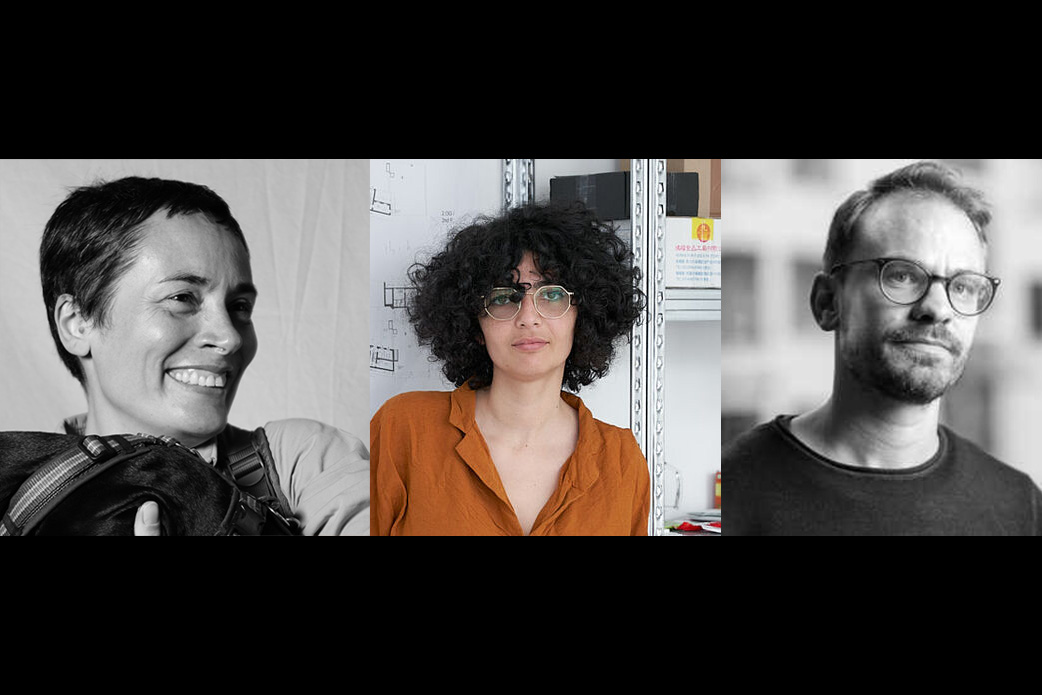
The seminar approaches these developments from several perspectives. Merijn Oudenampsen, political scientist at the University of Amsterdam, gives an account of the political changes that have taken place in the Netherlands over the past twenty years. Lara Khaldi, artistic director of de Appel in Amsterdam and a former member of the curatorial team of documenta fifteen, will reflect on the conditions facing art institutions and on how institutions can function as infrastructures for artistic practice. Falke Pisano, internationally renowned artist living and working in Rotterdam, will focus on artists’ own forms of organising, addressing working conditions, the production of value, and how artists can develop shared strategies for navigating uncertainty and risk rather than having to bear them individually.
Respondents:
Sara Edström, The Artists’ Association of Sweden
Emmeli Persson, Visual Arts Association Sweden
Contributors:
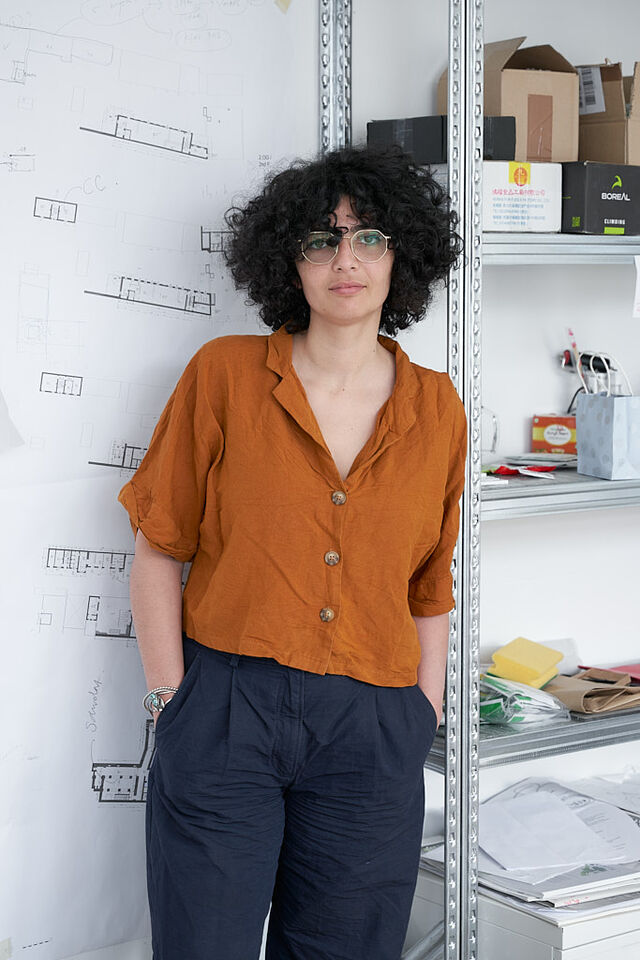
Lara Khaldi
Lara Khaldi is Artistic Director of de Appel and an alumna of its curatorial programme (2013/2014). She served on documenta 15’s curatorial team (2020–2023), headed the Media Studies Programme at Alquds Bard College, Jerusalem (2018–2020), and tutored at Sandberg Institute’s Disarming Design MA. Her curatorial work includes Shifting Grounds (Sharjah Biennial, Ramallah), and edited publications on Jumana Emil Abboud.
Foto: Nicolas Wefers

Falke Pisano
Falke Pisano works as an artist, researcher and educator. Her practice questions how enduring ideas, institutions, and systems have historically developed, and how art might challenge them, often through long-term research cycles. Her current research explores historic and contemporary forms and domains of institutional governance, aiming to create space for imagination and disruption within this class-coded societal field. Based in Rotterdam, she was 2023 Superhost at MHKA, Antwerp, and has shown at the Venice Biennale, Manifesta, Museo Reina Sofía, and Berlin Biennale. Pisano initiated the art educators workgroup together with Platform BK and teaches at the Master Fine Art at HKU, Utrecht.
Foto: Wang Xue Sophia
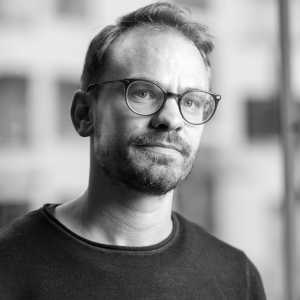
Merijn Oudenampsen
Merijn Oudenampsen is a political scientist and sociologist, specialized in the study of political ideas. He wrote an award-winning PhD on the ideas behind the rise of the Dutch populist right. His book No Nonsense, a history of the Dutch neoliberal turn, is out this summer with Verso Books. He teaches political science at the University of Amsterdam.
Foto: Steven Ligthert

Time, date and location
When: 4 sept, 10.00–12.00 am
Place: Zoom
Language: English and Swedish
Price: Free of charge
Registration: Registration required.