As a gift from Sweden to Finland, Olof Marsja’s sculpture Ljus spårare/Čuovgga guorri (Light Tracker) moves across borders – between languages, cultures and time. A floral being on skis gazes towards the horizon, joined together by materials that bear traces of the work of the hand, of the organic, the found and the shaped. In the meeting between the Sami and the Swedish, the traditional and the contemporary, a story emerges about identity in motion.
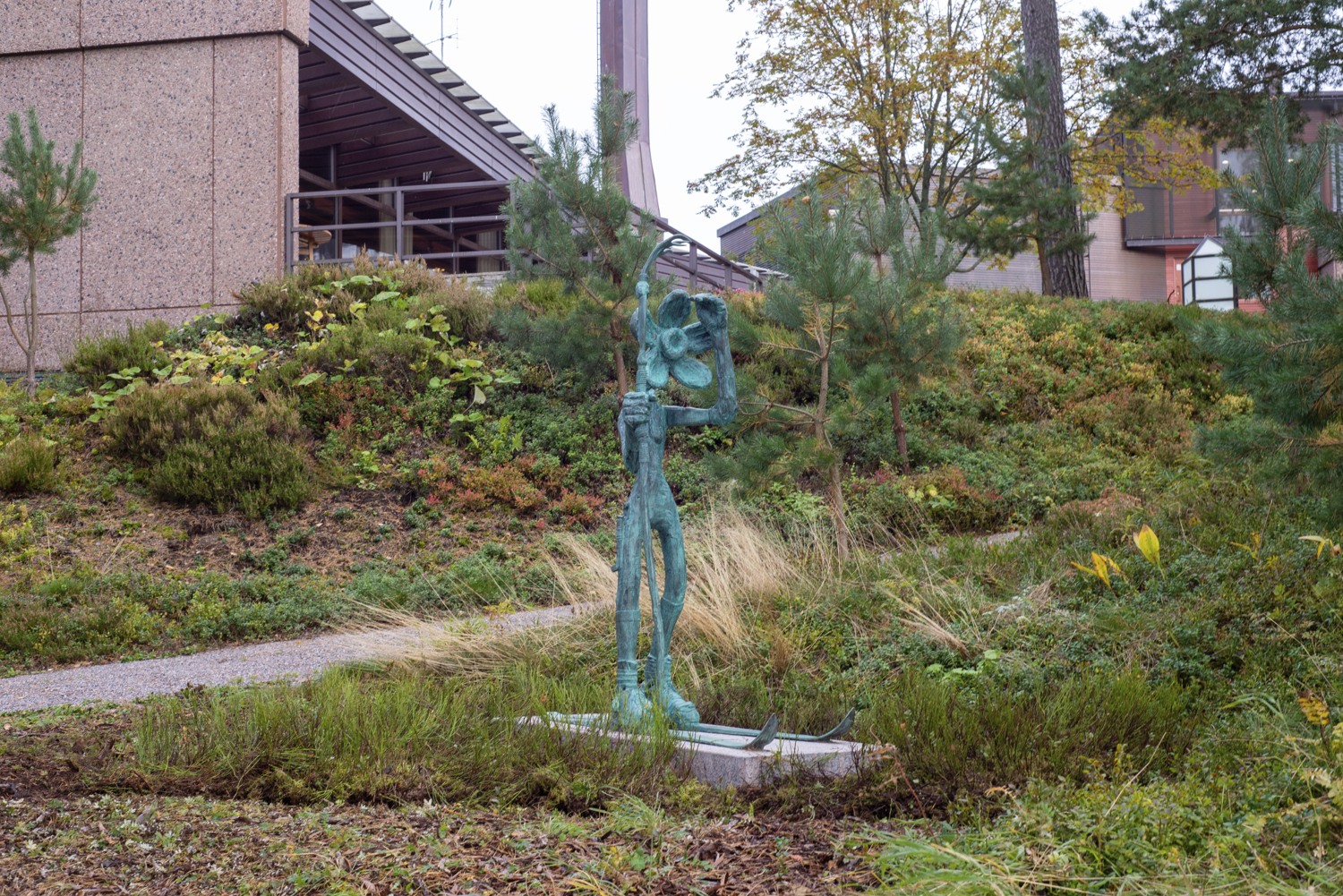
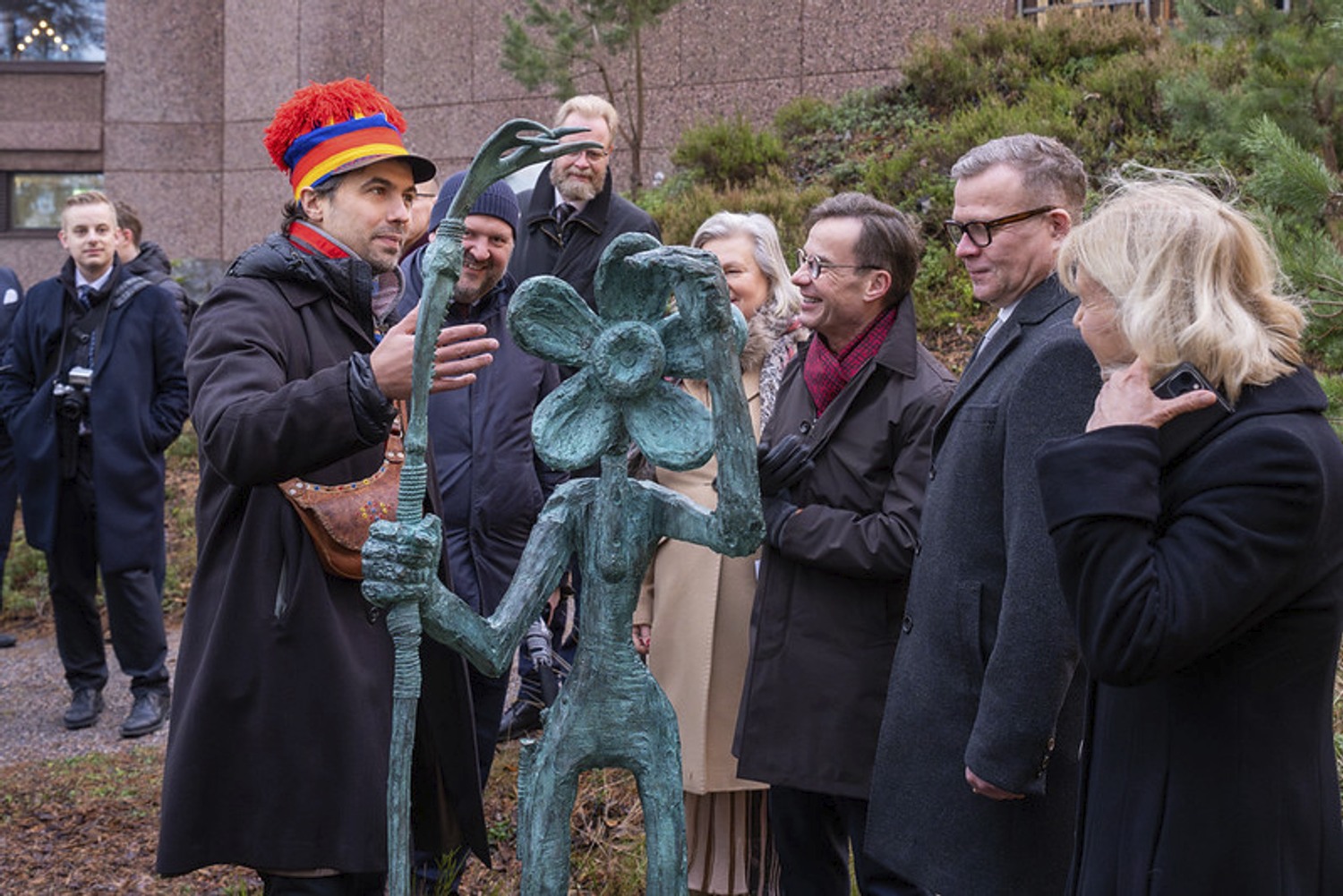
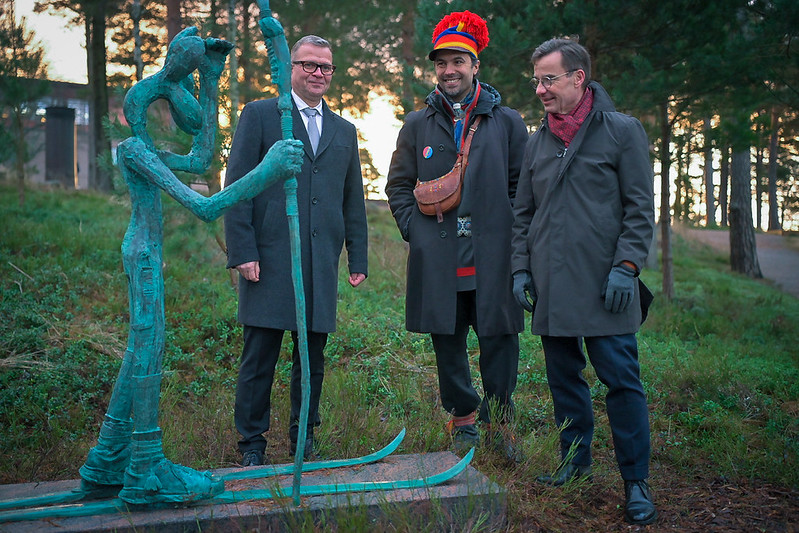
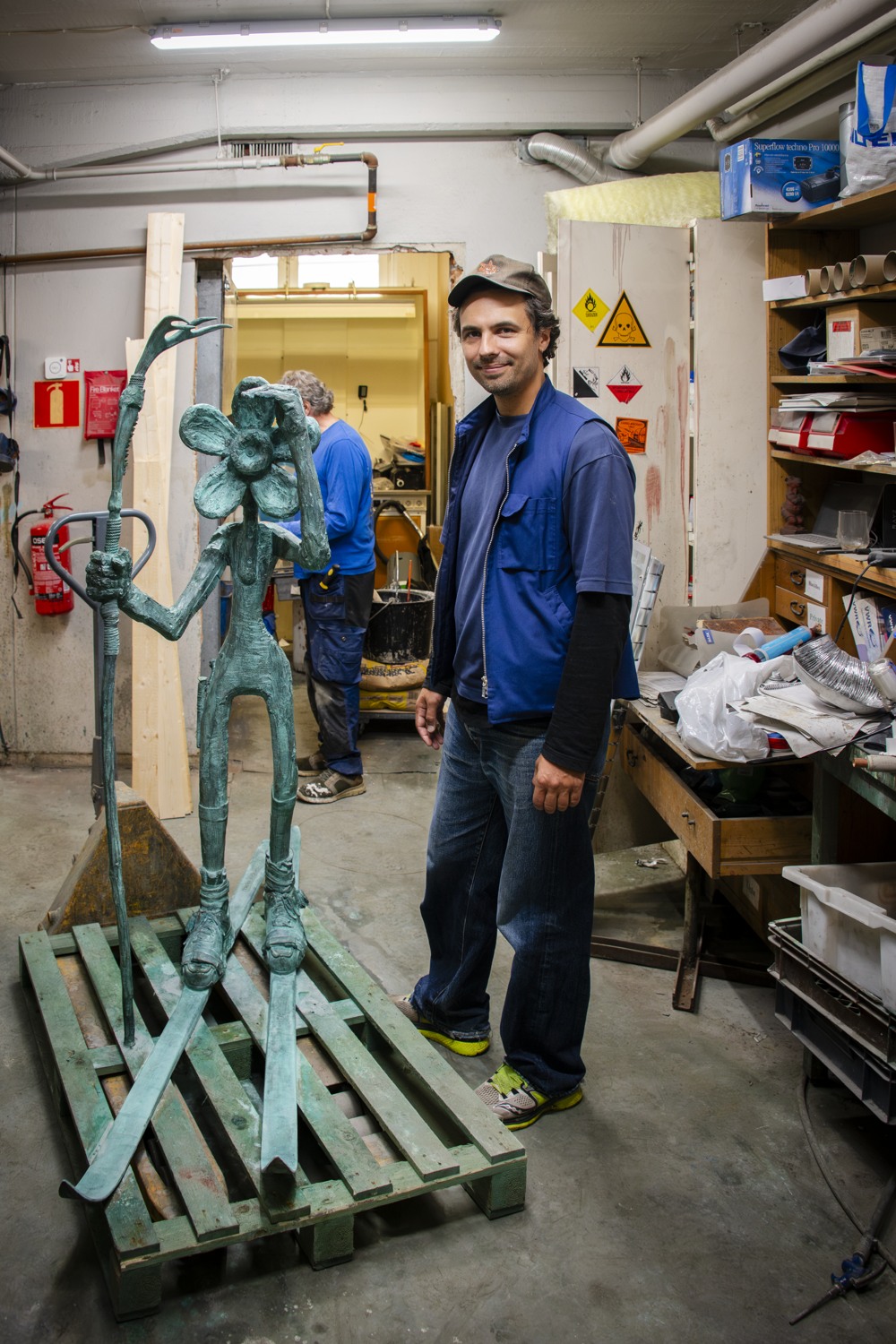
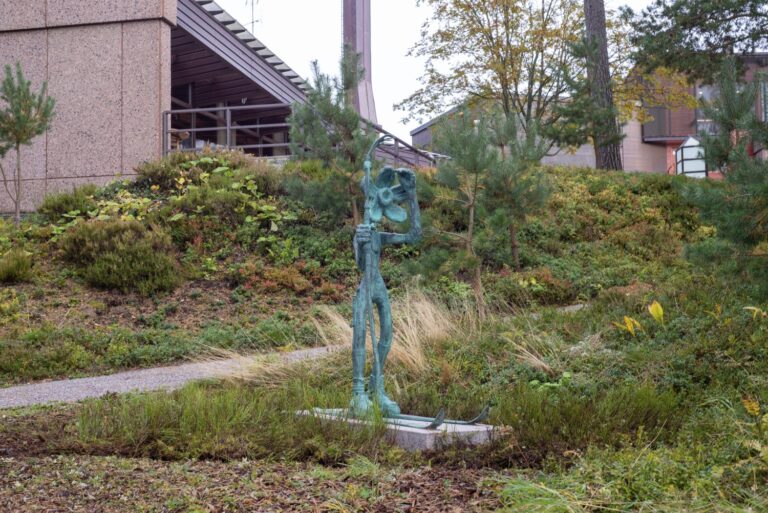
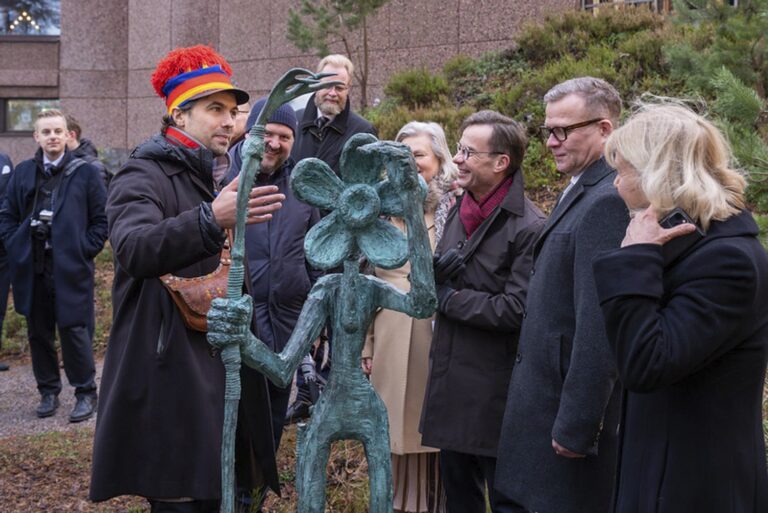
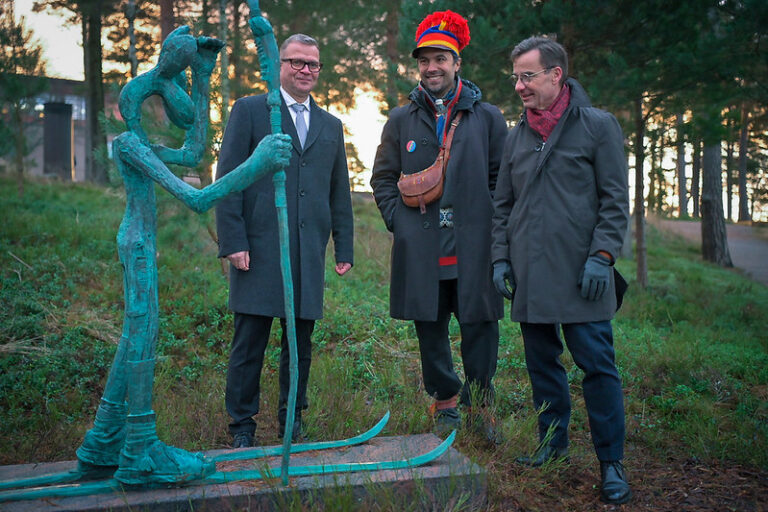
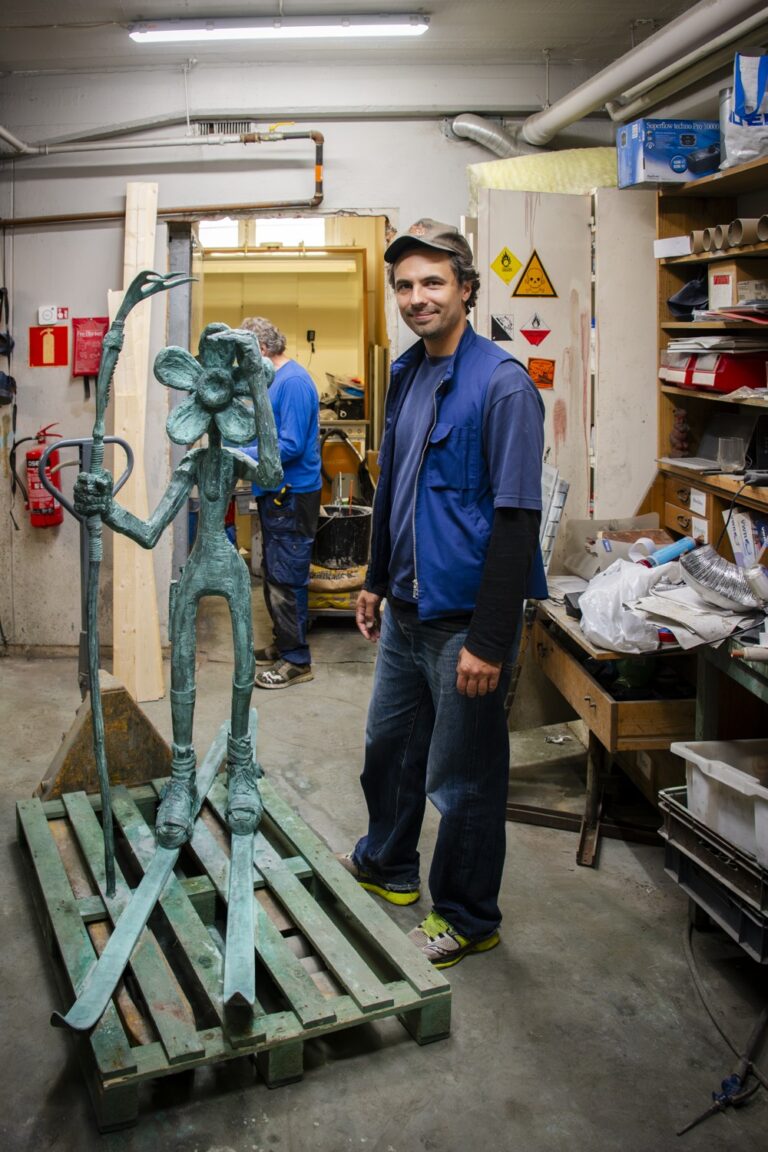
Olof Marsja’s bronze sculpture, Ljus spårare (Light Tracker), or Čuovgga guorri in Northern Sami, is Sweden’s gift to Finland on the occasion of the 50th anniversary of the Finnish-Swedish cultural centre Hanaholmen in 2025.
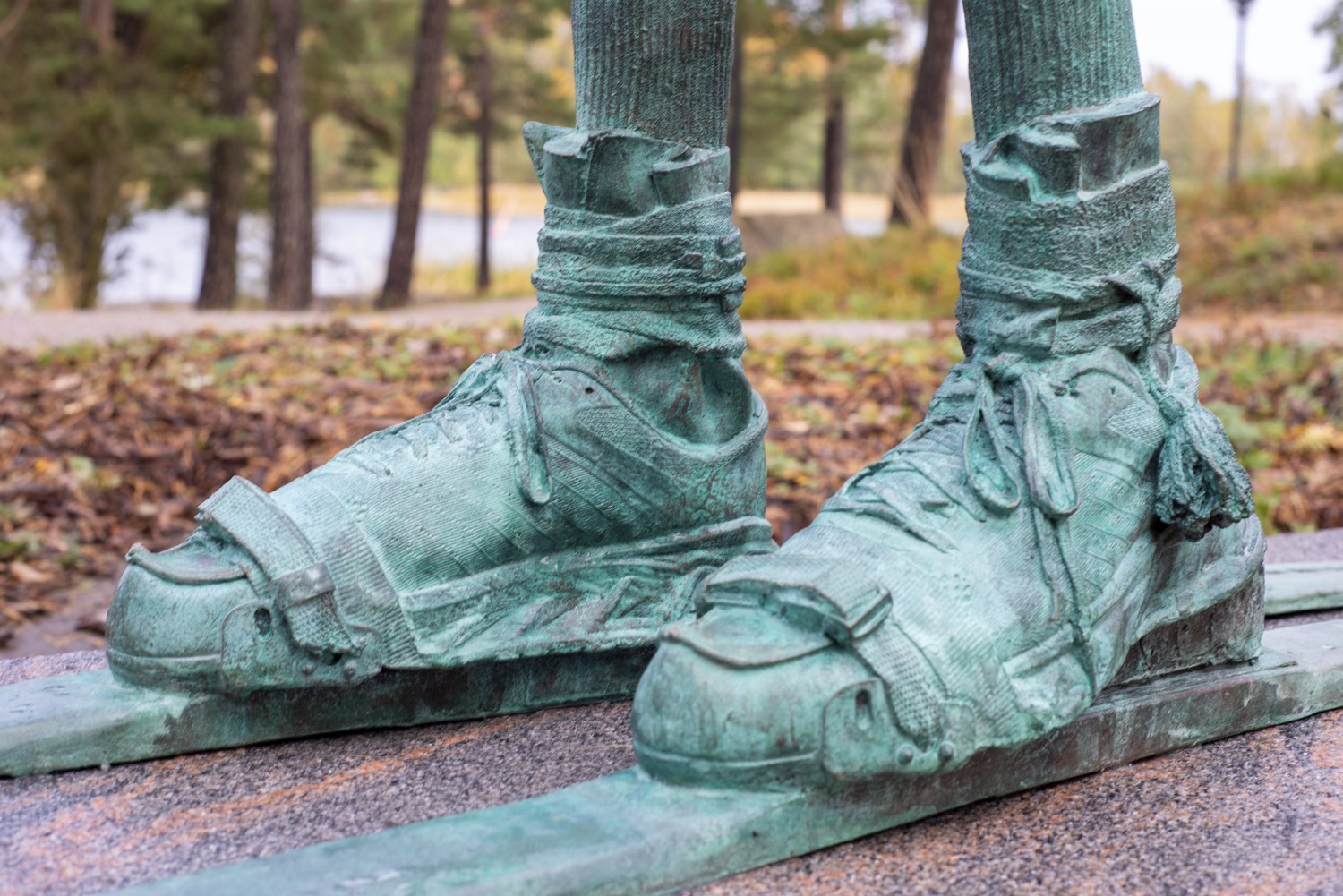
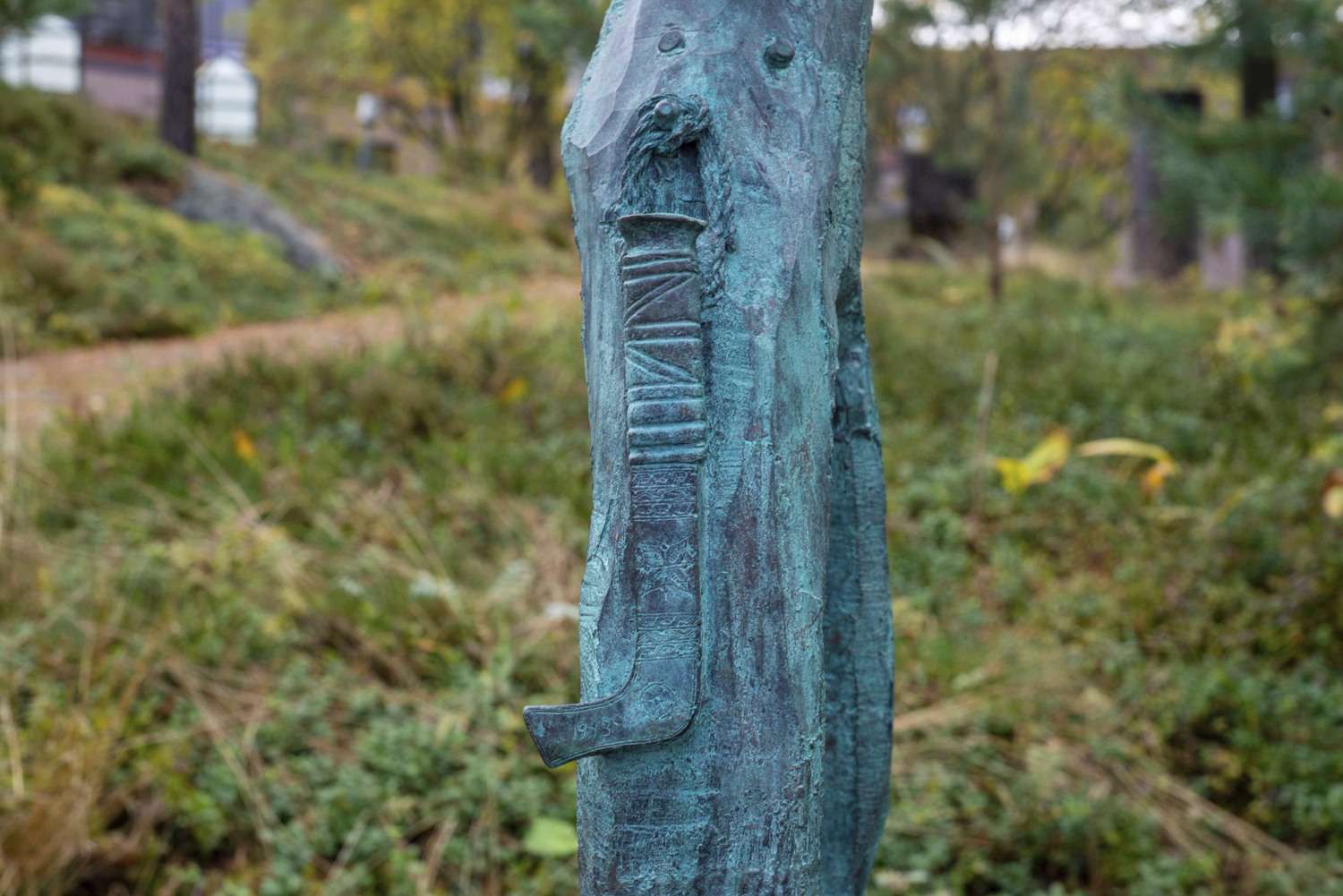
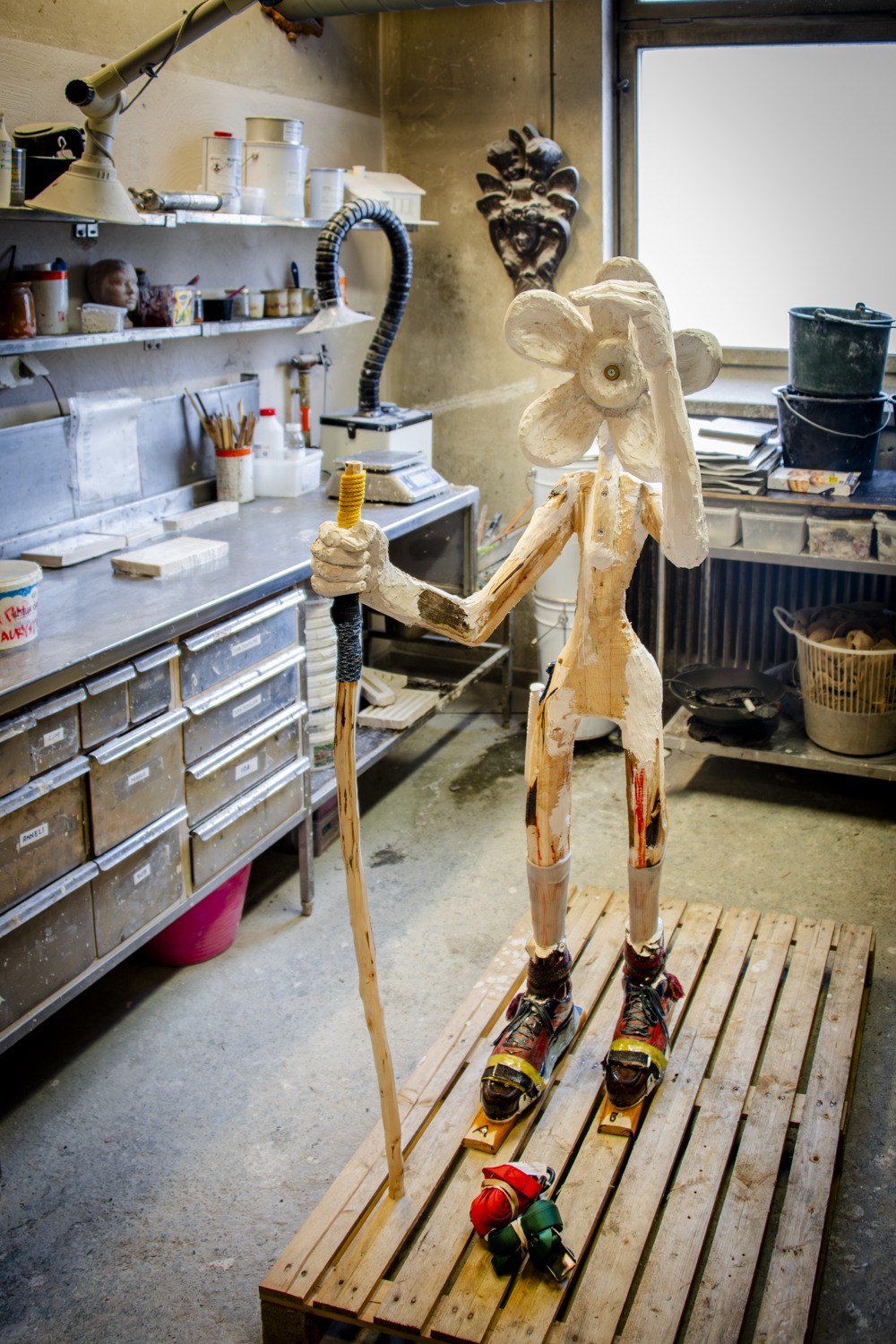
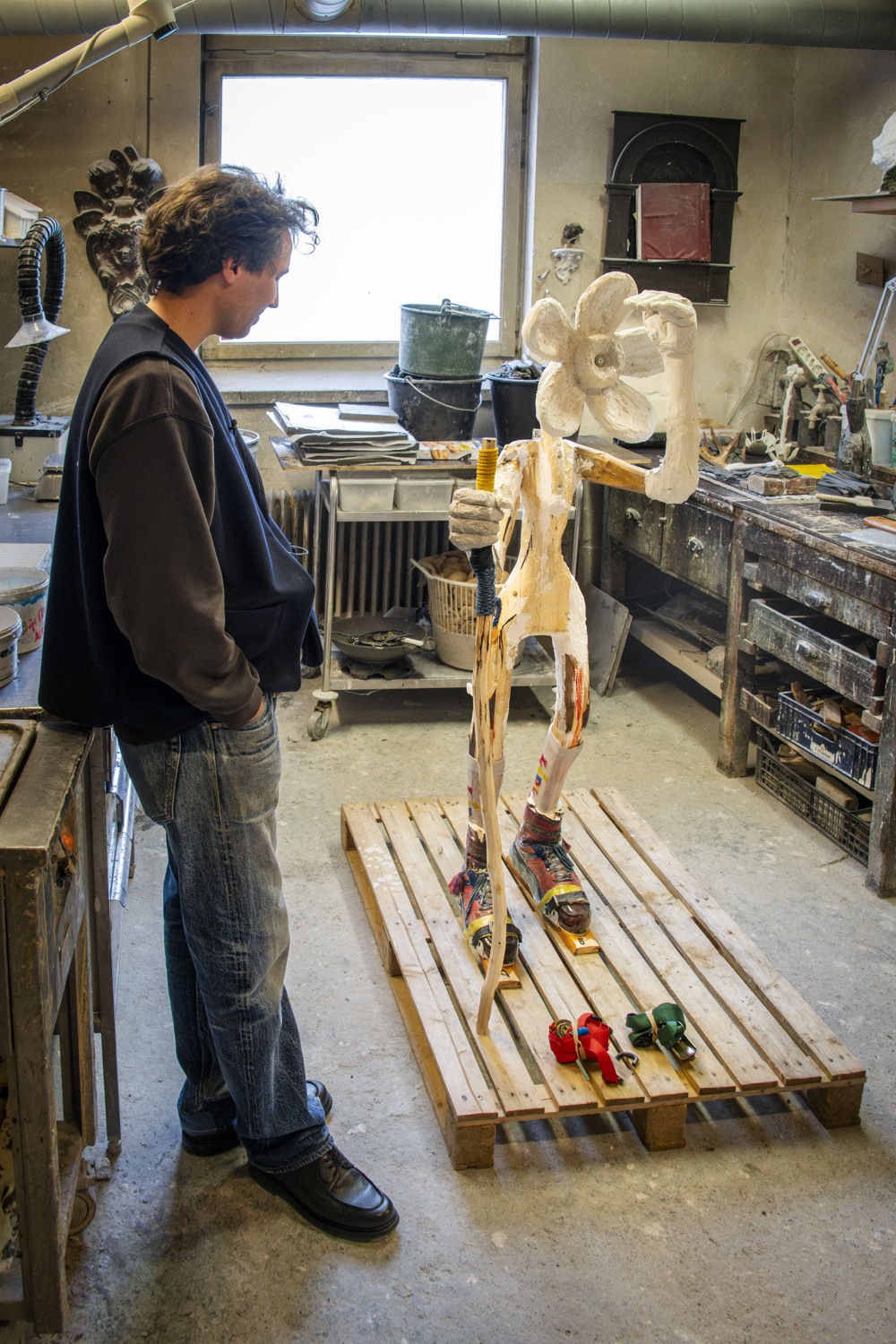
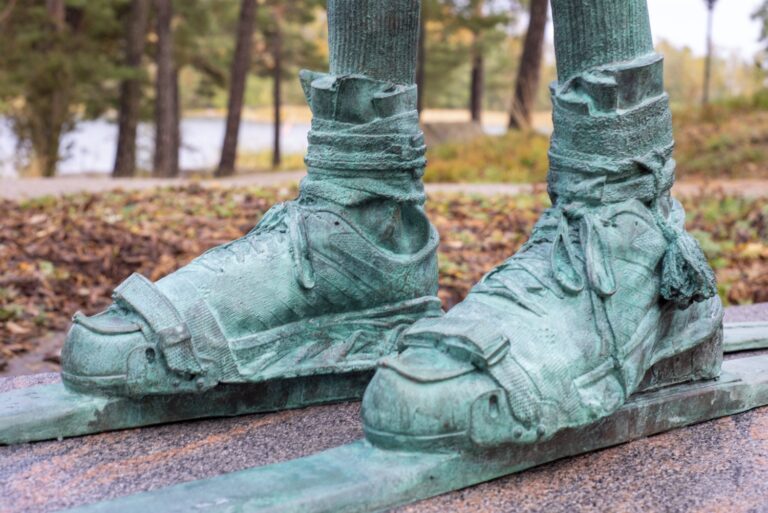
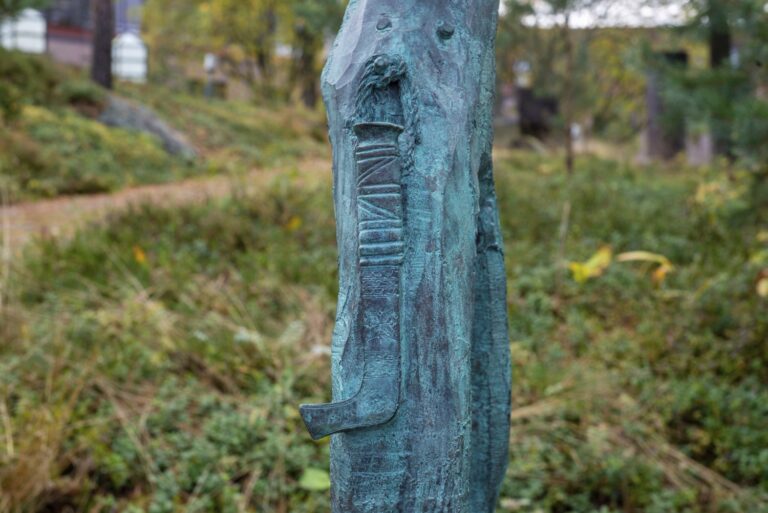
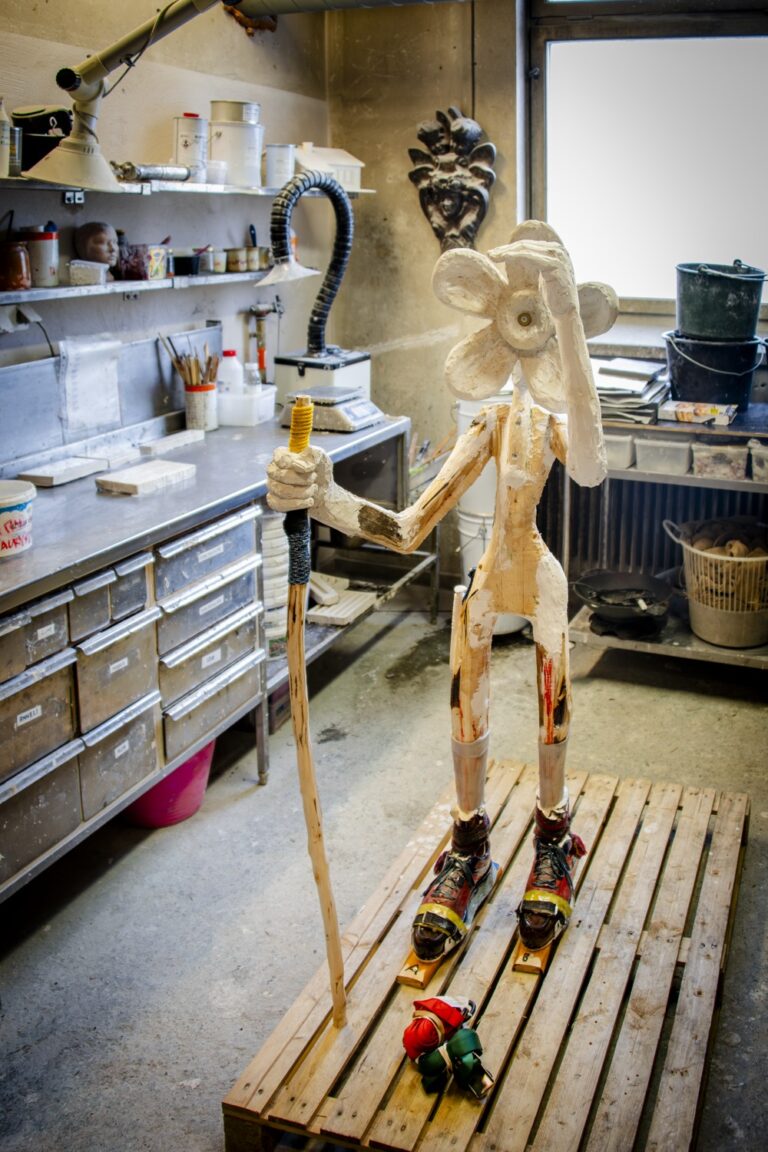
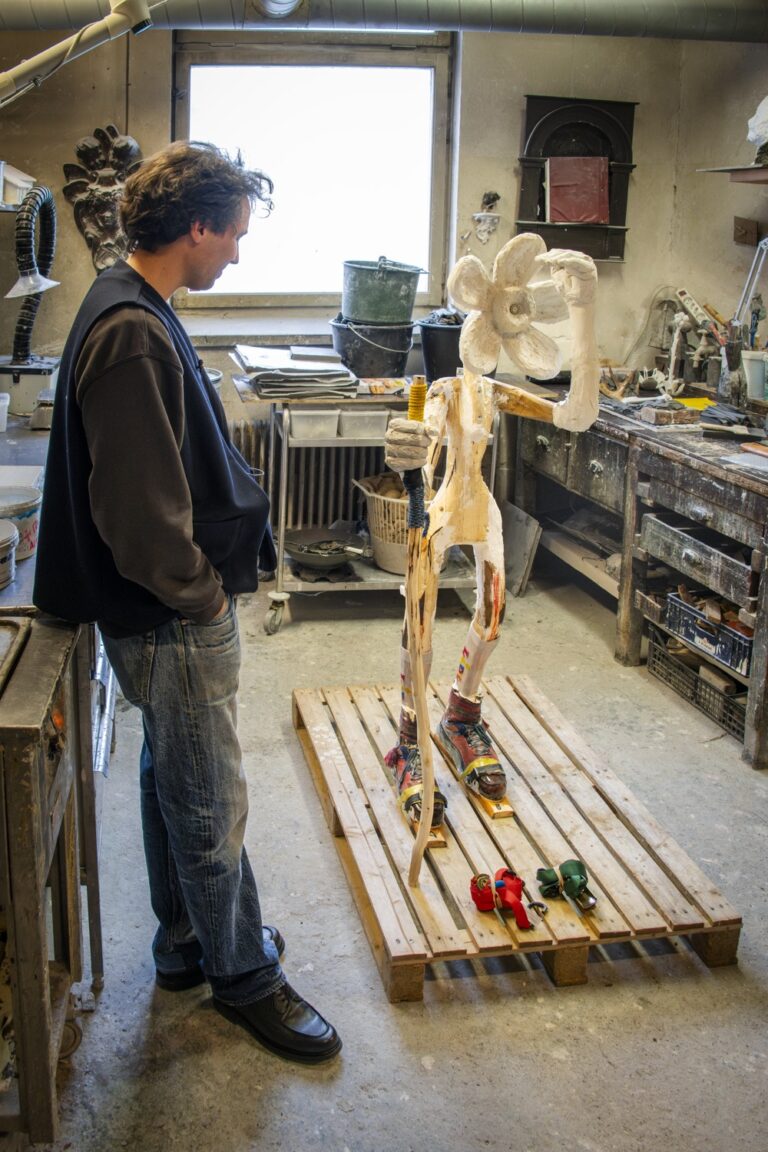
The work depicts a floral being on skis, with its gaze fixed on the horizon and directed towards the future. A hybrid being that moves freely across the national and cultural borders that history has created. Up close, the traces of the original materials are clearly visible: wood, plywood, plaster, reindeer antler, textile, plastic and other found objects. The joints – with screws, strings and wooden dowels – are deliberately visible and openly shown.
These transitions and intersections are central to Marsja’s art in which he recurrently explores questions of identity, belonging and being between worlds – with one foot in the Sami culture and one in the Swedish. In Ljus spårare, the handmade and organic meet the industrially manufactured. Found materials, multifarious techniques and approaches together form a body that reflects how we humans do not constitute a homogeneous whole, but are supported by a web of memories, stories and cultures in constant transformation.
The imprint of the hand is a recurring theme in Marsja’s work. It stands as a symbol of warmth, presence and the interpersonal – in contrast to a world that is moving towards the frictionless, digital.
Artist Biography Olof Marsja
Olof Marsja (b. 1986, Sweden) is educated at Konstfack University of Arts, Crafts and Design in Stockholm, the Academy of Fine Arts in Helsinki and the Sami Education Centre in Jokkmokk. His sculptural imagery combines traditional craftsmanship with contemporary materiality. Through combinations of materials and techniques, he creates hybrid entities activating questions of identity, cultural heritage and the presence of the body in a sculptural landscape that moves between the personal and the collective. His work has been shown at Göteborgs Konsthall, Bonniers Konsthall and Röhsska Museum of Design and Craft, among others. In 2019 he was the recipient of the Maria Bonnier Dahlin Foundation Grant and the Sten A. Olsson Culture Scholarship in 2023.