Over the past fifteen years, Poland has undergone profound political and institutional changes that have had far-reaching consequences for democratic governance, the rule of law, public discourse, and the relationship between the state and civil society. In this seminar, we examine how shifts in political leadership—from a more liberal, EU-oriented centrist politics to nationalist-conservative populism, and then to an ongoing democratic and institutional reorientation—have reshaped the political landscape in Poland.
The seminar takes as its point of departure developments from 2015 onward, when Law and Justice (PiS) came to power and initiated a period marked by stronger state control over key institutions, conflicts over judicial independence, changes in public service media, and a more confrontational relationship with the EU. At the same time, broader questions concerning nationalism, social conservatism, welfare policy, cultural identity, and the resilience of the democratic system came to the fore. With the change of government in 2023, a new phase began, in which the ambition to restore rule-of-law principles and strengthen the relationship with the EU has become central, while political and institutional polarization continues to shape the situation.
The seminar highlights developments in Poland from several different perspectives: x provides an overall context for the political changes in Poland over the past fifteen years and describes the most significant shifts in power, ideology, and institution-building. y reflects on how these changes have affected the public sphere, the cultural sector, and the conditions for institutions, organizations, and actors working within civil society. z addresses the strategies that have been developed in response to these changes, and the lessons that can be drawn from efforts to maintain autonomy, room for maneuver, and democratic resilience during a period of intense political polarization.
Through these perspectives, the seminar aims to open up a conversation about what political change means for cultural institutions, the public sphere, and artistic practice—and what experiences from Poland may contribute to a Swedish artistic and cultural policy context.

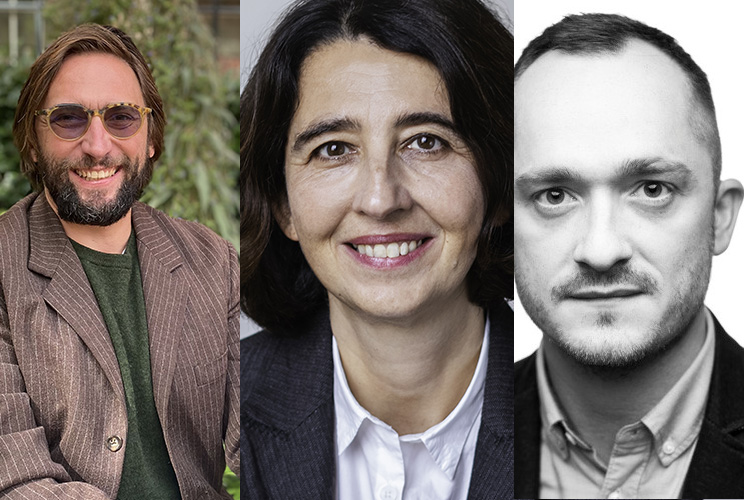
Joanna Mytkowska
Curator
Joanna Mytkowska is a curator and art historian. She has been the director of the Museum of Modern Art in Warsaw since 2007. Previously, she worked as a curator at the Centre Pompidou, Paris. She co-founded the Foksal Gallery Foundation, where she worked between 2001 and 2007. In 2005 she curated the Polish Pavilion at the 51st Venice Biennale, exhibiting “Repetition” by Artur Żmijewski. Joanna Mytkowska curated and co-curated, among others: “Never Again. Art against War and Fascism in the 20th and 21st centuries” (Museum of Modern Art in Warsaw, 2019), Edi Hila “Painter of Transformation” (Museum of Modern Art in Warsaw, 2018), “Alina Szapocznikow, Sculpture Undone 1955–1972” (Centre d’Art Contemporain Wiels, Brussels; Hammer Museum, Los Angeles; Museum of Modern Art in New York, 2012–2013), “Les promesses du passé” (Centre Pompidou, Paris, 2010).

Kuba Szreder
Curator
Kuba Szreder is a researcher, curator, and lecturer at the Academy of Fine Arts in Warsaw. He collaborates with artistic unions, consortia of postartistic practitioners, clusters of art researchers, art collectives, and artistic institutions in Poland, the UK, and other European countries. He is the editor and author of several catalogues, books, readers, book chapters, articles, and manifestos that scrutinize the social, economic, and theoretical aspects of the expanded field of art. His current research interests include the conditions of artistic labor, new models of artistic institutions, artistic self-organization, artistic research, and postartistic theory and practice. His book The ABC of the Projectariat: Living and Working in a Precarious Art World was published in 2021 by Manchester University Press and the Whitworth. In 2025, together with Kacper Greń and the Institute of Network Cultures in Amsterdam, he published the visual essay Duckrabbits Unveiled: A Sneak Peek at Postartistic Theory and Practice.
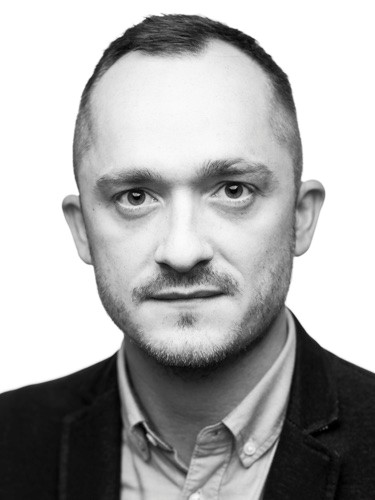
Michał Głowacki
Professor
Michał Głowacki is Associate Professor at the Faculty of Journalism, Information and Book Studies, University of Warsaw, Poland and, since 2024, the Deputy Dean for Research and International Collaboration. He has conducted research projects funded by the European Commission, Polish National Science Centre, the Polish National Agency for Academic Exchange, the Thomson Foundation and the Polish-American Fulbright Commission. Member of Media and Journalism Research Centre Community (MJRC) and the Media Diversity Research Centre (MDI). The Editor in Chief of the “Central European Journal of Communication” (2019-2025). His research interests are media policy, public service media and innovation culture.
A joint collaboration
The seminar series is produced by Statens konstråd and CAPIm – The Centre for Art and the Political Imaginary (HDK-Valand, University of Gothenburg, and the Royal Institute of Art), and is organised in collaboration with Bildkonst Sverige and Konstnärernas Riksorganisation.
Time, date and location
When: 13 Maj, 10.00–12.00 am
Place: Zoom
Language: English and Swedish
Price: Free of charge
Registration: Registration required.