Over the past fifteen years, Hungary has undergone significant political and institutional transformation. These changes have had far-reaching consequences for democratic governance, the public sphere, and the cultural sector. This seminar examines how shifts in political leadership since 2010 have reshaped the relationship between the state and the cultural field, affecting cultural priorities, funding structures, institutional frameworks, and the conditions under which artists and cultural organisations operate.
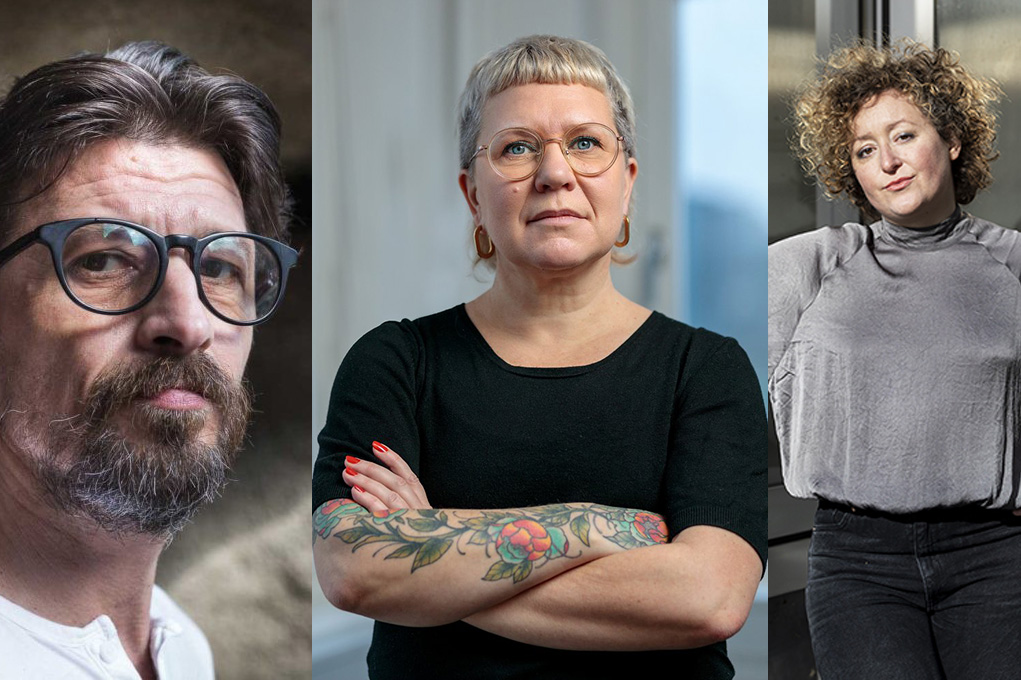
Bringing together perspectives from political science, cultural policy and artistic practice, the seminar explores these developments from multiple vantage points. Professor Péter Bajomi-Lázár will contextualise the broader political shift in Hungary over the past decade and a half. Katalin Erdődi, Artistic and Managing Director of Trafó House of Contemporary Arts in Budapest, will reflect on how these changes have translated into institutional restructuring, funding reallocations and new pressures and questions of autonomy versus alignment. Artist Szabolcs KissPál will address the strategies artists and arts organisations have developed in response to these transformations.
Through these perspectives, the seminar aims to open a conversation about the broader implications of political change for cultural institutions and artistic practice, and what can be learned from the Hungarian experience in a Swedish artistic context.
Respondents:
Sara Edström, The Artists’ Association of Sweden
Emmeli Person, Bildkonst Sverige (Visual Arts Sweden)
Participants

Katalin Erdődi
Katalin Erdődi is a curator, dramaturg and writer based in Vienna and Budapest, and currently serves as Artistic and Managing Director of Trafó House of Contemporary Arts in Budapest. She has previously worked with institutions and festivals including steirischer herbst (Graz), brut/imagetanz (Vienna), Impulse Theater Festival, GfZK – Museum of Contemporary Art (Leipzig), and Ludwig Museum (Budapest). Her work focuses on politically engaged artistic practices, experimental performance and art in public space. Recent projects explore socio-political transformation through collaborative research on post-socialist rural life in Hungary. She also collaborates as a dramaturg with performance artists and writes for journals including Springerin, Bildpunkt and Mezosfera.

Szabolcs KissPál
Szabolcs KissPál (1967) lives in Budapest, Hungary. His main field of interest is the intersection of new media, visual arts and social issues. He taught and held workshops in eleven countries mostly in Europe, and he is currently an associate professor and head of the Intermedia Department at the HUFA Budapest. Between 2012-15 he has been actively involved in various activist projects.

Péter Bajomi-Lázár
Péter Bajomi-Lázár is Professor of Mass Communication at the Budapest University of Economics and Business. His monographs include Party Colonisation of the Media in Central and Eastern Europe (2014) and Journalism Ethics in Eastern Europe (with Dalma Boldog, 2026). He is the founding editor of the Hungarian media studies quarterly Médiakutató (The Media Researcher, est. 2000) and a member of the Euromedia Research Group.
A joint collaboration
The seminar series is produced by Statens konstråd and CAPIm – The Centre for Art and the Political Imaginary (HDK-Valand, University of Gothenburg, and the Royal Institute of Art), and is organised in collaboration with Bildkonst Sverige and Konstnärernas Riksorganisation.
Time, date and location
When: 27 March, 10.00–12.00 am
Place: Zoom
Language: English and Swedish
Price: Free of charge
Registration: Registration required.